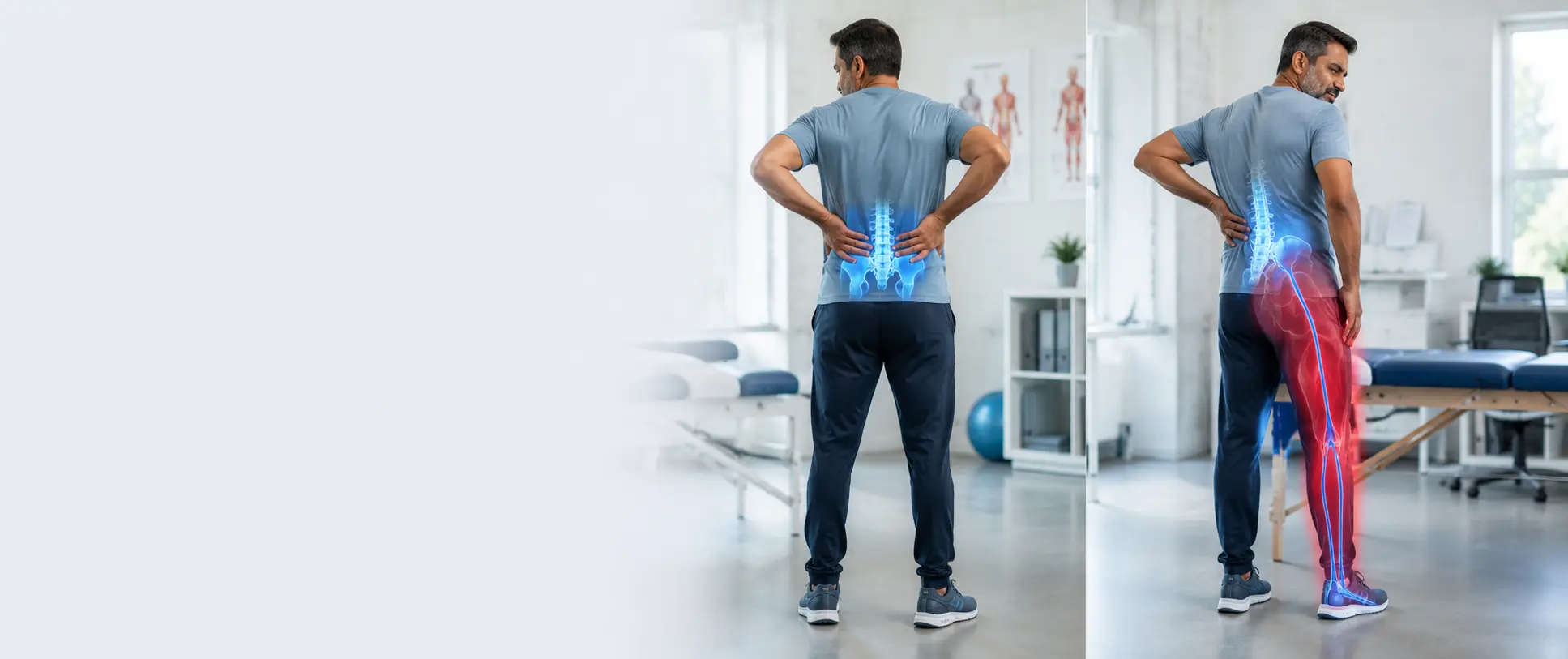
Sciatica vs Back Pain: How to Tell the Difference | Causes & Symptoms
Lower back pain is one of the most common health complaints worldwide, but not all back pain is the same. Many people assume that pain in the lower back automatically means they have sciatica. In reality, sciatica and general lower back pain are different conditions, although they can occur together.
Understanding the difference is important because the underlying causes, symptoms, and treatment approaches may vary. Knowing what type of pain you're experiencing can help you seek the right care and avoid unnecessary discomfort.
What Is Lower Back Pain?
Lower back pain refers to pain or discomfort in the lumbar region of the spine, located between the ribs and the hips. It may be mild, moderate, or severe and can develop suddenly after an injury or gradually over time.
Most cases of lower back pain are caused by muscle strains, ligament injuries, poor posture, prolonged sitting, heavy lifting, or age-related changes in the spine.
The pain usually stays in the lower back, although it may sometimes spread slightly into the buttocks.
What Is Sciatica?
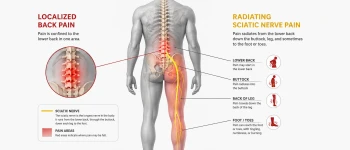
Sciatica is not a condition itself but a symptom caused by irritation or compression of the sciatic nerve, the largest nerve in the human body.
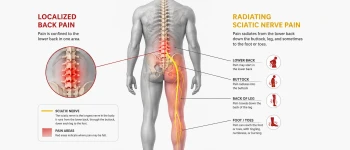
The sciatic nerve starts in the lower spine and travels through the buttocks, down the back of each leg, and into the feet. When this nerve becomes compressed, it causes pain that follows the path of the nerve.
Sciatica is commonly associated with conditions such as a herniated disc, spinal stenosis, or degenerative disc disease.
Sciatica vs Back Pain: Key Differences
FeatureLower Back PainSciatica
Pain locationLower backLower back, buttock, leg and foot
Pain typeDull, aching or stiffSharp, burning or shooting
Nerve involvementUsually noYes, sciatic nerve
Leg painUsually absentCommon
Numbness or tinglingRareCommon
Muscle weaknessUncommonMay occur
WalkingUsually possibleMay worsen pain
The biggest difference is that sciatica usually travels below the knee, while ordinary lower back pain typically remains in the back.
Common Symptoms of Lower Back Pain
People with lower back pain may experience:
- Dull aching pain
- Muscle stiffness
- Pain after lifting heavy objects
- Difficulty bending or twisting
- Pain that improves with rest
- Muscle spasms
Symptoms often improve within a few weeks with appropriate self-care.
Common Symptoms of Sciatica
Sciatica produces symptoms that are usually more noticeable because the sciatic nerve is involved.
Common symptoms include:
- Sharp pain running from the lower back into the buttock
- Pain travelling down one leg
- Burning sensation in the leg
- Tingling or pins and needles
- Numbness in the foot or toes
- Weakness in the affected leg
- Pain that becomes worse while sitting
Most people experience symptoms on only one side of the body.
What Causes Each Condition?
Causes of Lower Back Pain
Common causes include:
- Poor posture
- Muscle strain
- Ligament sprain
- Sedentary lifestyle
- Heavy lifting
- Obesity
- Weak core muscles
- Degenerative changes with age
Causes of Sciatica
Sciatica usually develops because something compresses or irritates the sciatic nerve.
Possible causes include:
- Herniated disc
- Lumbar spinal stenosis
- Bone spurs
- Degenerative disc disease
- Pregnancy
- Piriformis syndrome
- Spinal injuries
Identifying the underlying cause is essential for selecting the most appropriate treatment.
How Is the Diagnosis Made?
A healthcare professional will usually begin by discussing your symptoms and performing a physical examination.
During the examination, they may assess:
- Range of movement
- Muscle strength
- Reflexes
- Sensation in the legs
- Walking pattern
If symptoms suggest nerve compression or do not improve with conservative treatment, imaging tests such as X-rays or MRI scans may be recommended.
Natural Ways to Manage Sciatica and Lower Back Pain
Many people recover with conservative treatment, especially when symptoms are mild to moderate.
Stay Active
Gentle movement is often better than prolonged bed rest. Walking and light daily activities can help maintain flexibility and reduce stiffness.
Stretch Regularly
Stretching the lower back, hamstrings, and hip muscles may reduce tension around the spine.
Common stretches include:
- Knee-to-chest stretch
- Cat-Cow stretch
- Piriformis stretch
- Hamstring stretch
Improve Your Posture
Poor posture increases pressure on the lower back.
Simple adjustments such as sitting with proper back support, keeping your screen at eye level, and taking regular breaks can reduce strain.
Strengthen Core Muscles
A strong core supports the spine and reduces the risk of recurring back pain.
Exercises such as bridges, bird-dog, and modified planks can help when performed correctly.
Apply Heat or Cold
Cold packs may help during the first 48 hours after an injury.
Heat therapy is often beneficial for relieving chronic muscle tightness and improving circulation.
Maintain a Healthy Weight
Carrying excess body weight places additional stress on the lower back and spine.
A balanced diet and regular exercise support both recovery and long-term spinal health.
When Should You Seek Medical Attention?
Consult a healthcare professional if you experience:
- Severe pain lasting longer than two weeks
- Pain spreading below the knee
- Significant leg weakness
- Loss of bladder or bowel control
- Numbness around the groin
- Difficulty walking
- Pain after a major accident
These symptoms may indicate a more serious condition requiring prompt evaluation.
Frequently Asked Questions
Is sciatica more painful than lower back pain?
Sciatica often feels more intense because it involves nerve irritation. The pain may be sharp, burning, or shooting and can travel down the leg.
Can lower back pain turn into sciatica?
Yes. If a condition such as a herniated disc begins compressing the sciatic nerve, lower back pain may progress to sciatica.
Can sciatica go away without surgery?
Many cases improve with conservative treatment, including exercise, stretching, posture correction, and physical therapy. Surgery is usually considered only when symptoms are severe or persistent.
How do I know if my pain is muscular or nerve-related?
Muscular pain usually remains in the lower back and feels dull or stiff. Nerve pain often travels down the leg and may be accompanied by numbness, tingling, or weakness.
Is walking good for sciatica?
For many people, gentle walking can help reduce stiffness and improve circulation. However, activities should be adjusted if walking significantly increases pain.

Author: Varun Ahuja
Acupressure & Acupuncture Therapist | Dietetic Aide | Pain Management Specialist with over 12 years of clinical experience, I offer non-invasive, drug-free treatments for chronic pain, health issues. My practice integrates personalized acupressure and acupuncture therapies, including advanced techniques like acupuncture, electroacupuncture, cupping, and Sujok therapy, along with diet and lifestyle counseling based on Ayurvedic principles. My mission is to make natural and accessible pain management available to all, reducing dependence on medications. Explore my work and online therapy platform at www.livecure24.com.
Feel free to use images in our website by simply providing a source link to the page they are taken from.
-- LiveCure24
Share views on Sciatica vs Back Pain: How to Tell the Difference | Causes & Symptoms
Please keep your views respectful and not include any anchors, promotional content or obscene words in them. Such comments will be definitely removed and your IP be blocked for future purpose.
 12th Aug 2026
 7th Aug 2026
 9th Dec 2024
 8th Sep 2025
 5th May 2025
 9th Oct 2025
 7th Aug 2026
 11th Jul 2026
 19th Dec 2024
 19th Dec 2024
 18th Jun 2025
 26th Jul 2026
 2nd May 2025
 12th Aug 2026

